What is our Food Story?
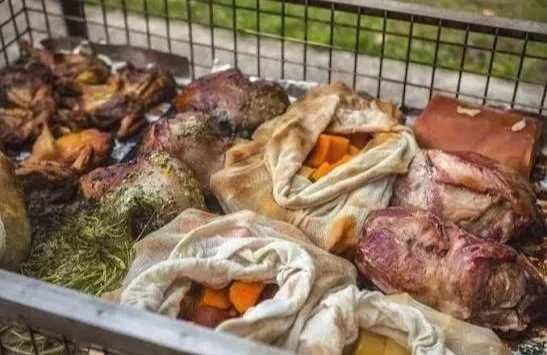
Food stories are everywhere, three Kore Hiakai Collective members think so …
Everyone has a food story, shaped by an incident, a moment, trauma, fun or evoking of memories. These celebrate moments in time, laughter, loss and more importantly whakapapa. We hand those stories down in our own whanau. A good friend told us of her food trauma associated with kawakawa, it was funny and real, and yes kawakawa is food. He kai he rongoā, he rongoā he kai.
Wherever you travel in Aotearoa there is evidence etched in our whenua, present in our storytelling, alive in our waiata and mōteatea, and are part of the whakapapa that weaves us to our whenua and those who came before us. Place names refer to our histories, battles, love and conquests, and our relationship with kai.
Driving from Ōtaki to Te Whanganui a Tara you drive over the Waikanae River, the waters of the grey mullet, meander around and Te Waewae Kapiti o Tara rāua ko Rangitāne comes into view, identifying the boundaries signifying early tribal territories.
At Ruangarehu, which refers to an ember pit or a place of sanctuary for Te Whānau a Taupara, the diggers and trucks left after a week of action. Most weeks, it is just the whānau trudging along, doing what they can, but that week there were tradies, machinery and visible progress.
As they drove away, we realised that in some ways we are in a better place now than we were before the flood. That is not an easy thing to say. Cyclone Gabrielle brought harm and disconnection that should never be romanticised or wished upon anyone. But through the long on-going work of rebuilding, we have had to clear away, look again and make choices about what should return, what needs to change and what we want this whenua to be able to sustain.
Have we made the right choices since? Aua. We don't know yet.
Machinery can make transformation look sudden, but after it leaves, the whānau remain. The work continues slowly: restoring, rebuilding, planting, noticing, adapting and trying again.
Perhaps this is part of our food story too - not a clean return to what was there before, but an ongoing relationship with whenua, shaped by what has happened, and by the decisions made for those who come after us.
Everywhere we venture there are kai stories from our culture if you are open to seeing and hearing them. Next time you are wandering around, think about the place names you are seeing and how they got there and why. There may be varying accounts, but when you read them all you will see a theme, think about when you retell a story it’s never the same as the way you heard it but the intention and the desire to retell it are.
From food culture to food rights
Food is a human right. But food is also about the rights of Indigenous peoples to maintain relationships with our whenua, protect and transmit knowledge, participate in decisions affecting our communities, and exercise self-determination. In Aotearoa, these questions cannot be separated from Te Tiriti o Waitangi and tino rangatiratanga. Food sovereignty asks us to look beyond whether food is produced or available and to understand who has access, who makes decisions and what a self-determined future looks like.
These are systems questions. They are also justice questions. They are questions grounded in our values. Māori knowledge is not simply something to add as an extra, after the work has been done or an embellishment that beautifies an existing, already established but not consulted on, plan.
Mātauranga Māori is not a resource waiting to be incorporated into someone else's strategy. It is held within whakapapa, tikanga, place, relationships and responsibility.
Food sovereignty without Te Tiriti is just another policy. Māori are not stakeholders; we are right holders. Te Tiriti does not require Māori food systems to become NZ food culture; it requires Māori authority over Māori food systems to be upheld.
It recognises Indigenous rights and authority and supports that. Honouring Te Tiriti is understanding that Aotearoa has a food story, and that it looks quite different to whoever is telling it. It is recognising whose food story are we reaching for and who are we excluding when we do so.
At Kore Hiakai, and with the collective we often talk about moving beyond simply responding to hunger and moving towards changing the foundational systems that create inequitable access to kai. We don't need to simply create a better national food narrative.
We need to live it. We are simply asking ‘what kind of food system we are creating?’ — and whether it enables people, whānau and communities to exercise and determine their own food futures.
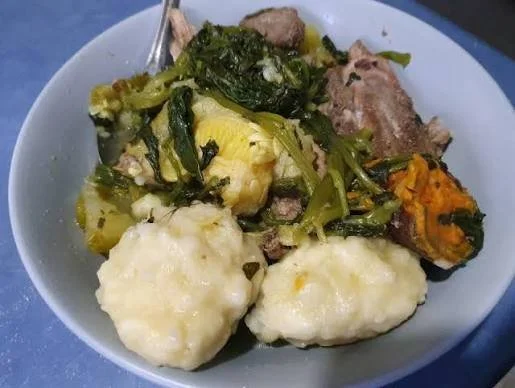
Aotearoa produces extraordinary amounts of food, yet many whānau struggle to access healthy, affordable and culturally appropriate kai. Our food story cannot only be about what we produce or what we sell to the world. It must also be about who has access, who has power, who makes decisions, and who is able to thrive. It is about the food stories that have been long present in our landscapes through Tangata Whenua.This means understanding the legacy of colonisation and how this has and continues to shape our food systems.
Are we prepared to honour the first kai systems of our whenua and the Te Tiriti relationship that protects Māori authority?
Titiro whakamua, hoki whakamuri. The future of food is ancient
Kania Worsley, Hera Denton, Moko Morris - Kore Hiakai Collective members