He korokoro tūī - the throat of a tūī.
While traditionally a compliment for a singer, this whakataukī captures the essence of what we believe true thought leadership should be: a clear, resonant note that permeates the noise.
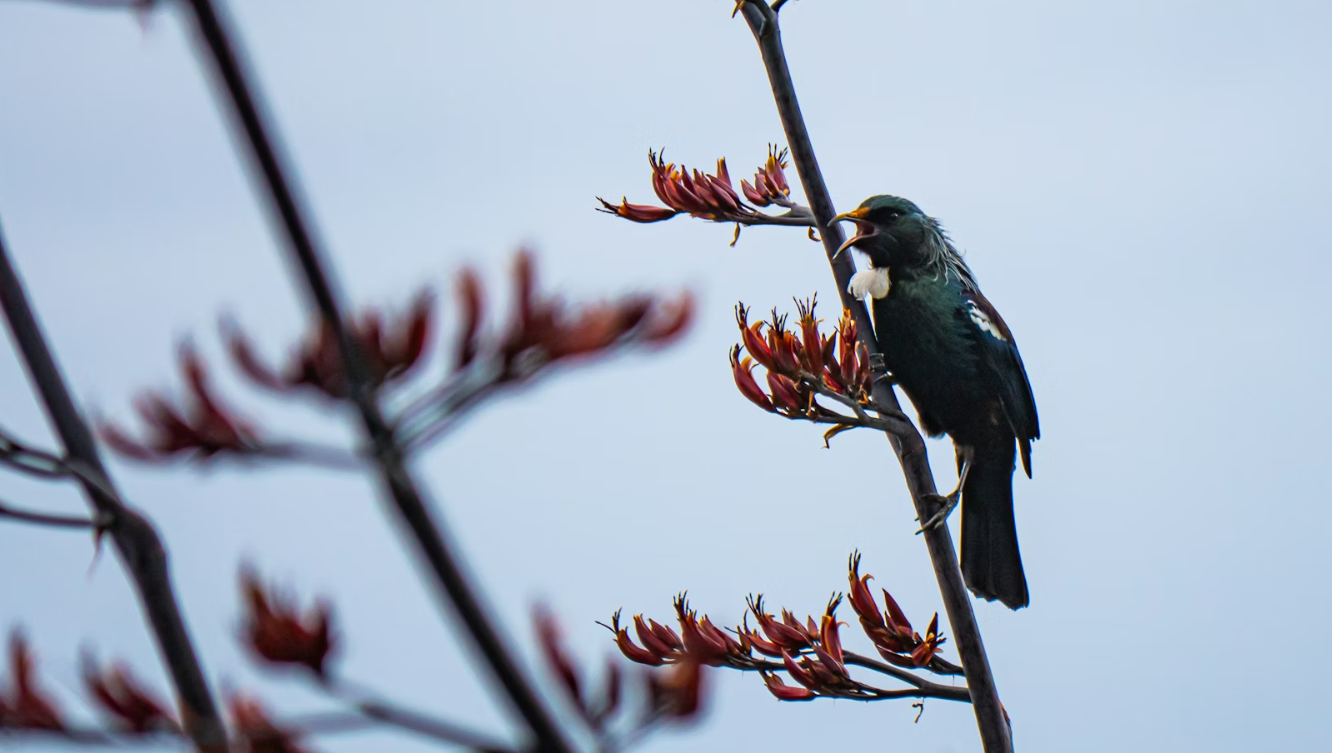
"Thought leadership" isn't a destination; it is a practice. It is less about being the loudest voice in the room and more like the song of the tūī: a clear, resonant note that permeates the noise and cuts through the static of the status quo—a melody that is beautiful, yet sometimes doesn't go where you expect.
For Kore Hiakai to lead in this space, is to engage in the work of hearts and minds. It is an invitation to reconsider and shift narratives, challenge expectations, and reshape the very systems we live in through intentionality. This is the work of systems change.
Beyond Word Substitution
A "tone of voice" document and language is never just about aesthetics - our language holds the essence of our intentions and gives frame to our behaviour. As we navigate shifts—from fuel shortages to international aggression to the impacts of weather events to the continuation of unjust systems that deliver inequality—the words we choose dictate the reality we inhabit. Kore Hiakai has been taking time recently to reflect on what language, in our current context, helps to shape our behaviour and our attitudes.
Language is often packaged and fed to us, especially in the media. We can easily pick up that panguage and not question the purpose or meaning behind words, the intention of their meaning, how it is being used and the effect it has on people.
A year ago, within the Kore Hiakai Zero Hunger Collective we encountered a different framing for the Pacific as people of the Moana. Instead of referring to the Pacific or Small Island Developing States (SIDS), referring People of the Big Ocean States, to Tangata Moana. This is a reclamation of identity away from Pākehā western definitions. By orienting toward the Moana, the big ocean, the scale of the conversation of the conversation is changed. Therefore with it, we change our own thinking and behaviour.
This is the discipline of deep thought—doing the internal work to understand why we speak the way we do, who it is affecting, checking the place of decolonisation and re-indigenisation and what we are amplifying. We do this so we can empower and educate ourselves first, and then offer that to others, through our thinking and our language. This acknowledges that our word choices are part of systems change.
Sitting in our Kaupapa
In a fast-paced world, one of the most radical acts of leadership is pacing. At Kore Hiakai part of our practice involves the discipline of "sitting with our kaupapa" soaking in them and taking the time to ask, “How does our purpose and values speak to us in this specific moment?”
In April, our team came back together after a few weeks away from each other, as we regathered we needed to reground our work. We spent our first hour simply sitting with our kaupapa—feeling them and considering them and how they shape who and how we are - as a team, as an organisation.
Those seven kaupapa—ūkaipōtanga, whanaungatanga, manaakitanga, kaitiakitanga, wairuatanga, rangatiratanga, and kotahitanga—are not just words on a wall; they keep us accountable to each other and our practice, to our whakapapa and our wider connections.
Showing the “Soak Moments”
The world is saturated with pristine, "finished" answers. But there is wisdom in the messy, in being honest about the reality of the process. It is helpful to see "under the hood" of professional practice.
Thought leadership is not found in a book or a paper; it is found in:
The "Soak Moments": The time spent in deep reflection before a decision is made.
The Emerging Conversations: Sharing ideas while they are still taking shape.
The Uncomfortable Messy Bits: Being transparent about the friction and struggle that lead to growth.
By modelling our processes rather than just our products, Kore Hiakai hopes to offer something more valuable than a list of "woke words." We offer some wayfinding for how to think, how to disagree, and how to evolve. We are not suggesting we get it right all of the time. Part this practice is to make mistakes, to reflect, to pivot and get feedback.
A Look Under the Hood
The leadership shown in the relanguaging occurs in real-time. We often have to do the thinking as we have to deliver. Currently, we are wrestling with the term "fuel crisis." We are careful of using the word "crisis," recognizing its links to COVID-related anxiety but also that it escalates certain behaviours. By moving away from using this word we hope to instead invite people to identify the aspects of our current reality that need our focus and response with integrity, compassion, and clarity.
For now, Kore Hiakai are choosing to refer to much of the current situation as being about "the cost of fuel" or “access to fuel,” as an attempt to step back from the emotive weight of the word “crisis” and speak directly to the complex reality we are addressing.
We are also cautious of framings like "war" and “conflict” or naming specific regions. Geopolitical conflicts are often loaded with Western biases. Our role is not to take sides, but to ensure our language doesn't inadvertently blame or frame issues with assumptions or as one-sided. It has been helpful for us to take a breath and think carefully about how we language this. This is part of our work to decolonize and challenge our own prejudices. For now, we are trying phrases like “limited access to oil,” “disruption to global energy corridors,” or “energy-driven increase in living costs” as well “fuel related cost of living increases/ impacts.” And we remain open to reflection, feedback and a pivot when needed.
We aim for language that addresses the specific human or systemic reality and invites us to reframe that from our western assumptions rather than relying on emotive media and politically generated language. Again we will not always get it right.
An Integration of Head and Heart
We hope our leadership in this space helps us speak with honesty, humility, and truth—elevating those we speak of and to. We seek to integrate the head and the heart. And like the tūī, we hope our offering permeates the environment, creating a resonance that lasts long after the conversation ends.
Ko te kai a te Rangatira? He kōrero—What is the food of the leader? It is dialogue.
The sustenance of leadership is found in the dialogue itself, not only in the finished product, but in the honest, humble, and truthful process of relanguaging our world together.
He korokoro tūī—the throat of a tūī.