Reflections from the Go Eco Kai Symposium
The recent Go Eco Kai Symposium brought together a diverse network of practitioners, community leaders, service providers, growers, and advocates. Each person arrived with a shared commitment: to strengthen kai systems, improve access to kai, and pave equitable pathways toward locally grounded food futures.
This gathering offered a vital opportunity to move beyond deficit framing and instead focus on community-led responses, dignity, and true structural change. Here are some key reflections from two days of deep connection.
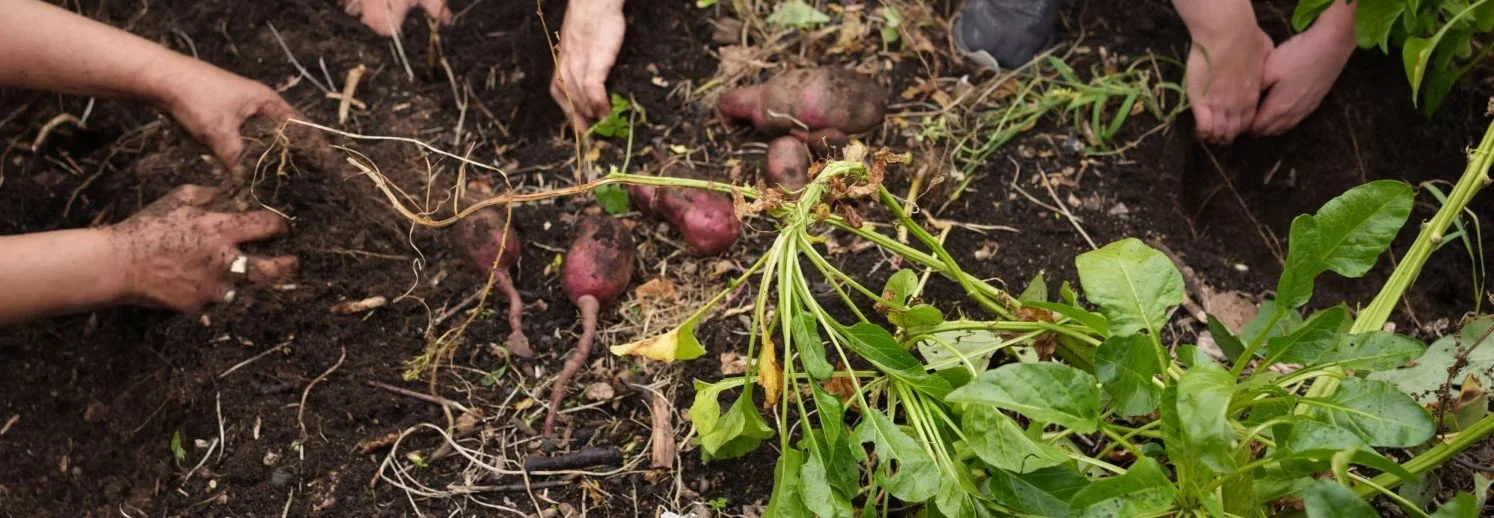
All photos sourced from Go Eco Kirikiriroa
Grounding the Kaupapa: Relational Spaces
Curated and anchored by Hera Denton, her quiet leadership and ability to weave the people and the Go Eco whanau brought us all together. Facilitated with warmth, waiata and humility by Maria Huata as MC, the environment remained accessible, relational, and grounded from the outset,
Te Tapui Atawhai Auckland City Mission (ACM): Tara Moala from ACM brilliantly articulated the tension many organisations face between managing immediate food insecurity and striving toward long-term, transformational goals rooted in Kai Motuhake. It was incredibly encouraging to see her highlight the collaborative mahi of the Kore Hiakai Collective, including our Te Tiriti o Waitangi webinar series, as part of the national conversation. This presentation offered a realistic framework for organisations navigating the inner tension between immediate food provision and long-term Kai Motuhake. This is a model organisations could actively explore alongside the progressive visions of others, such as The Salvation Army’s goal of "no food banks after 2030.”
The model acknowledged a truth that many in the room understood deeply, that multiple realities can exist at once. Food banks and food relief services continue to play a critical role for many whānau experiencing hardship. At the same time, many organisations recognise that emergency food provision alone cannot create lasting food security. There is an urgent need for practical frameworks that help organisations navigate what this transition means for their staff, volunteers, communities, and funding models, while at the same time meeting the immediate demand for their services.
The Serve: Centered their kōrero on whānau realities, showing how food support systems can respond to complex challenges with profound care, grace, and relational practice. Ngā mihi for slowing us down and reminding us why we are here. They also showed what happens when we create systems that weave together. This regional approach to triaging kai needs of whānau upholds the mana of whānau and the special character of all the services that are connected to The Serve.
Mai Kai: Gretta Carney’s, presentation was a masterclass in what happens when communities collectively demand better outcomes and push back against structural barriers. Mai Kai exists because our communities already know how to feed ourselves. The question is whether the system can learn to recognise and support that. Current food systems are largely structured around commercial retail models and individual business ownership. Community-led, cooperative, and collective approaches often find themselves navigating barriers that were never designed with them in mind. Long before modern food systems emerged, communities organised, shared resources, traded, grew food collectively, and cared for one another. These practices continue today.
The challenge is not whether communities have solutions, the challenge is whether our regulatory, funding, and policy systems are designed to support them.
Te Ngākau
At its heart, the symposium was a reminder that Kai Motuhake is not simply about food. It is about relationships. It is about self-determination. It is about reconnecting people to whenua, wai, seed, knowledge, and more importantly to one another
The symposium offered a valuable opportunity to move beyond deficit narratives and instead centre the strengths, innovation, and leadership already present within our communities. Across two days of kōrero, workshops, and whakawhanaungatanga a consistent message emerged, communities already hold many of the solutions. The challenge is whether our systems are prepared to recognise, support, and invest in them.
For many of us this raised an important question: if we are serious about building resilient food systems in Aotearoa, what regulatory and policy barriers need to be adjusted or removed to allow community innovation to flourish?
Stories centred the realities of whānau. They demonstrated how care, dignity, and relational practice can sit at the heart of this kaupapa. In a sector often driven by outputs and efficiency measures, return on investment and KPIs, we were reminded that relationships remain one of the most powerful tools for change.
The interconnectedness of Food security: We separate kai security from housing, income, transport, health, education, and social connection. The most effective responses recognise these interconnections and respond to the whole person rather than a single issue.
The Importance of Telling the Whole Story
One reflection I continue to carry is the importance of honest storytelling. In the food systems space, there can be a tendency to present projects - once they have succeeded, polishing the story and highlighting the outcomes. Yet some of the most valuable learning comes from understanding what did not work, where resistance emerged, what mistakes were made, and how challenges were navigated.
Systems change – or systems return - is often slow, frustrating, unpredictable, and messy.
If we are serious about learning from one another, we must create space for stories that include setbacks as well as successes. These stories help us build collective wisdom and avoid the illusion that transformation happens in a straight line and exactly as we planned.
The work of transforming food systems can be heavy. Many communities are carrying significant pressures while responding to growing need and shrinking resources. Spending two days together building relationships, exchanging ideas, sharing challenges, and offering encouragement reminded us that none of this work is undertaken alone. Whanaungatanga was the highlight of the symposium, and I am grateful to have been
Kotahitanga.
Kai Motuhake will not be achieved through a single programme, policy, or organisation. It will emerge through communities reconnecting with their own strengths, knowledge, and relationships. It will emerge through honouring Te Tiriti o Waitangi, supporting Māori leadership, removing barriers to community innovation, and creating systems that enable communities to thrive.
The path forward requires both patience and a healthy dose of impatience for change. I look forward to continuing to strengthen these relationships and figuring out where our collective contributions can make the deepest impact next.
If the energy, wisdom, and commitment present at the Go Eco Kai Symposium are any indication, that change is already underway.
With another Go Eco hui focused on wild food gathering already planned for the spring, the momentum is not slowing down. I am grateful for the opportunity to attend, listen, and learn—especially within spaces that are Māori-led and delivered.
Moko Morris, Pou Māori, Kore Hiakai Zero Hunger Collective