A year on from the publication of our Kai Motuhake resource, our co-authors - Kore Hiakai Kaimahi Moko Morris, Pou Māori and Tric Malcolm, Pou Ārahi - reflect on how it has been carried into different places and spaces.
We also include perspectives from invited contributors discussing how Kai Motuhake now shapes their mahi and is being lived out in their communities.
What does decolonisation and re-indigenisation mean to you in your context or organisation?
Tric Malcolm: The journey with Kai Motuhake over the last year has been humbling and powerful. It has been incredible to see how much it has resonated with people who have been looking for language and containers to express a longing for amplifying indigenous approaches and understandings. Those people have been searching for a sense of returning to ancient wisdom while integrating it with our current wisdom. Kai Motuhake is a Te Tiriti journey. It requires us to make the time and space to find our way as Treaty partners in the food and equity space.
Personally, I have had to reflect on where I still haven't done my work, reflecting on my assumptions, relearning to not be in control, continuing to repair my own whakapapa journey, and, as I age, to look for the wisdom that rangatahi have without the baggage of history that I carry.
I am grateful to Moko Morris for the staunch, gentle, patient and uncompromising wahine she is, and for her willingness to journey with me, and with Kore Hiakai, towards this moemoea, this dream & vision, of kai motuhake being lived by all in Aotearoa.
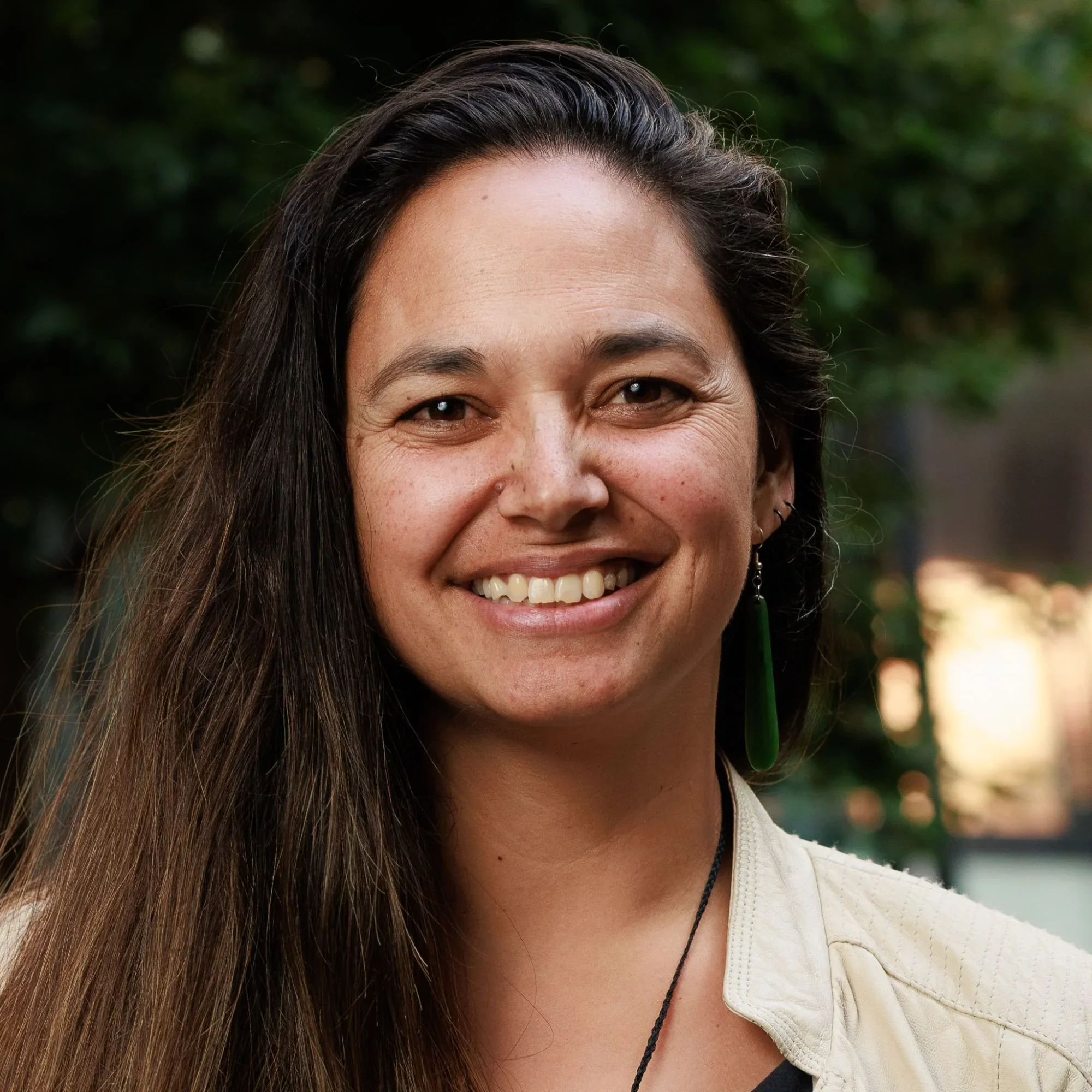
Tara Moala is the Tumuaki Tuari Kai of Te Tāpui Atawhai (General Manager of Auckland City Mission). She has been working alongside communities to build their kai sovereignty for many years and is passionate about incorporating Mātauranga Māori into Food Security of Te Tāpui Atawhai Auckland City Mission.
Tara Moala: Kai Motuhake has become a key kaupapa that we are embedding in our practices at Te Tāpui Atawhai Auckland City Mission, particularly within our work on food security. It is important to acknowledge that as a Tangata Tiriti organisation, Te Tāpui Atawhai was never and will never be indigenous. Our role is not to ‘re-indigenise’. However, because we are grounded in Aotearoa, and because my whakapapa is indigenous, alongside the whakapapa of many of my colleagues; we committed to decolonising our work in the food security space.
Embedding Kai Motuhake means drawing on mātauranga Māori and Pasifika knowledge shifting our vision towards an indigenous-focused future. This requires us to unpack and release aspects of western frameworks that no longer serve our people, in order to make space for new ways of working together.
When I share the moemoea (dream) of Kai Motuhake with our partner organisations, I find there is a natural willingness and acceptance to join us in our work, and for us to grow collaboratively with our Māori and Pasifika partners.
In the past, our focus has been on ensuring that whānau are eating well today. While this has been an act of deep aroha, it has also risked being shaped by western concepts of paternalism. We are deliberately moving towards mana enhancing practices grounded in indigenous concepts of care and sovereignty.
Part of our future planning, we are building our strategy through indigenous frameworks. One example is the Waka Taurua Model, which helps us to balance immediate needs of Food Insecurity with the long term moemoea of food sovereignty. On the food insecurity side, we respond to the needs of our whānau today with western tools, which is still important to maintain and continue for our whānau to access food parcels. While on the food sovereignty side, we are working on creating pathways towards Kai Motuhake. We know that this will be a long journey, yet, by holding fast to our kaupapa and embedding indigenous frameworks, we believe we are creating a smoother path for the next generation to carry forward.
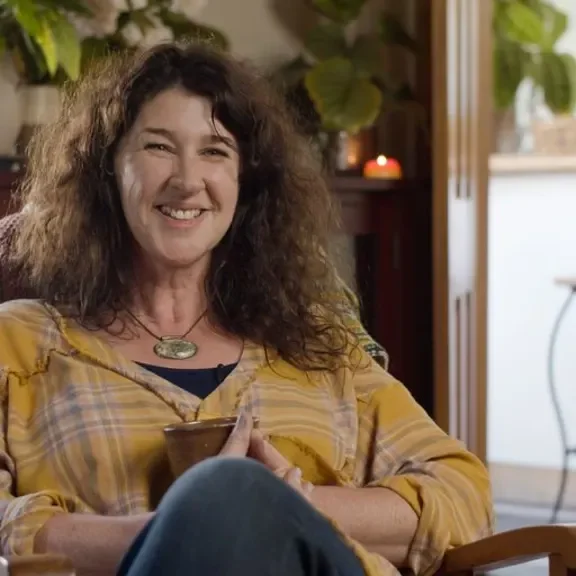
Julia Milne QSM is the Manager and co-founder of He Puāwai Trust, a whānau-led organisation in Te Awakairangi dedicated to building kai sovereignty, resilience, and whānau leadership through māra kai, internships, and collective kai projects.
Julia Milne: Decolonisation and re-indigenisation, in the context of my mahi, begins with understanding my own ancestral journey in relation to food as a Pakeha with Irish/Scottish roots. Kai is not neutral — across cultures it has been weaponised as a colonising tool. In Aotearoa too, food systems were deliberately disrupted, tikanga undermined, and dependence on centralised supply chains normalised. Poverty looks like disconnection- not only from land and growing practices, but also from the rituals and relationships kai holds together. It fits firmly in the palm of fear.
Acknowledging that kai trauma is real — that whānau have carried intergenerational experiences of scarcity, enforced dependency, and loss of tikanga — helps us see that kai insecurity is not an individual failure but the consequence of colonising systems. By naming these truths, we can better show up as tangata Tiriti: humble, committed to restoration, and willing to walk alongside tangata whenua in reclaiming sovereignty.
At He Puāwai Trust, the Kai Motuhake resource has been a pou, affirming that our mahi is part of a wider kaupapa of mana motuhake. The Kore Haikai Motuhake frameworks have been especially important, offering us practical tools to shift from crisis response to transformation. They remind us to ask: are we perpetuating dependency, or dismantling it? Are we creating space for whānau voice and leadership, or silencing it?
A central part of this shift has been the act of sharing kai together. Sitting at the same table, eating from the same pot, and working side by side reframes relationships. It shifts us from giver and receiver into kinship. It strengthens us as tangata Tiriti because it requires reciprocity, honesty, and humility. Most importantly, it opens opportunities for healing — healing the fractures between communities, healing disconnection from land, and healing the deep wounds left by colonisation.
For us, decolonisation and re-indigenisation are not abstract ideas. They are lived out daily — in the māra, in the pātaka, and in the shared meal — planting new seeds of sovereignty and resilience for futures very different from the past.
Moko Morris: Together and through kotahitanga, these reflections build the collective story of what Kai Motuhake looks like in practice – not as an abstract idea, but as our daily intentional choices, courageous actions, and a re-imagined future. The question is not whether change is possible, but whether we will be bold enough to choose it. These reflections guide us to act with courage, uphold mana, and choose a different type of energy.
Decolonisation is not a theory, we must work hard, I must work hard to remember and understand the bits that are not serving me or my people and why. The discomfort isn't a failure – it's a feature of dismantling dominant systems – this is what we want.
I have been encouraged by the many conversations I have had the privilege of sharing where people describe the tension between feeling inspired by kaupapa and wanting to act, while being but unsure how to translate it into concrete action in their organisation. Realities such as grappling with resource constraints, political barriers, institutional inability to move, and the overwhelming scale of systems change - rather than focusing on the small steps they are already taking can be challenging. What am I personally willing to do differently? Just by turning up and being willing to listen, to reflect and to pause is enough.